Series · Understanding El Niño
El Niño and marine life: why it changes what we see in the Pacific
Temperature doesn't work alone. Nutrients, food, and species distribution help understand why a warmer ocean can change an adventure.
The water that rises also feeds
La surgence occurs when depth water rises to replace surface water displaced by the wind. This water is usually cold and rich in nutrients, which favor the growth of phytoplankton: a food base for other organisms in the ocean. [1]
Thinking about that route changes the way you look at the sea. The life that appears on the surface is related to processes that we do not see at first sight, from the wind to the movement of water in depth.
A chain that starts with tiny organisms
NASA explains that, during El Niño, the weakening of equatorial alders and the greater thickness of the warm layer can reduce the nutrient surge in the equatorial Pacific. This can decrease the production of phytoplankton and affect the availability of food for zooplanktone, fish, birds and marine mammals. [2]
The mechanism should not be interpreted as an automatic disappearance of all such animals. It describes a connection of the food network: to know its effect on a population or a place you have to measure what changed there.
Species also change places
NOAA points out that warmer water during El Niño can lead tropical species to areas that are usually too cold for them. Seeing an organism outside its usual distribution may be an interesting sign, but it does not allow itself to attribute the encounter to a single cause. [4]
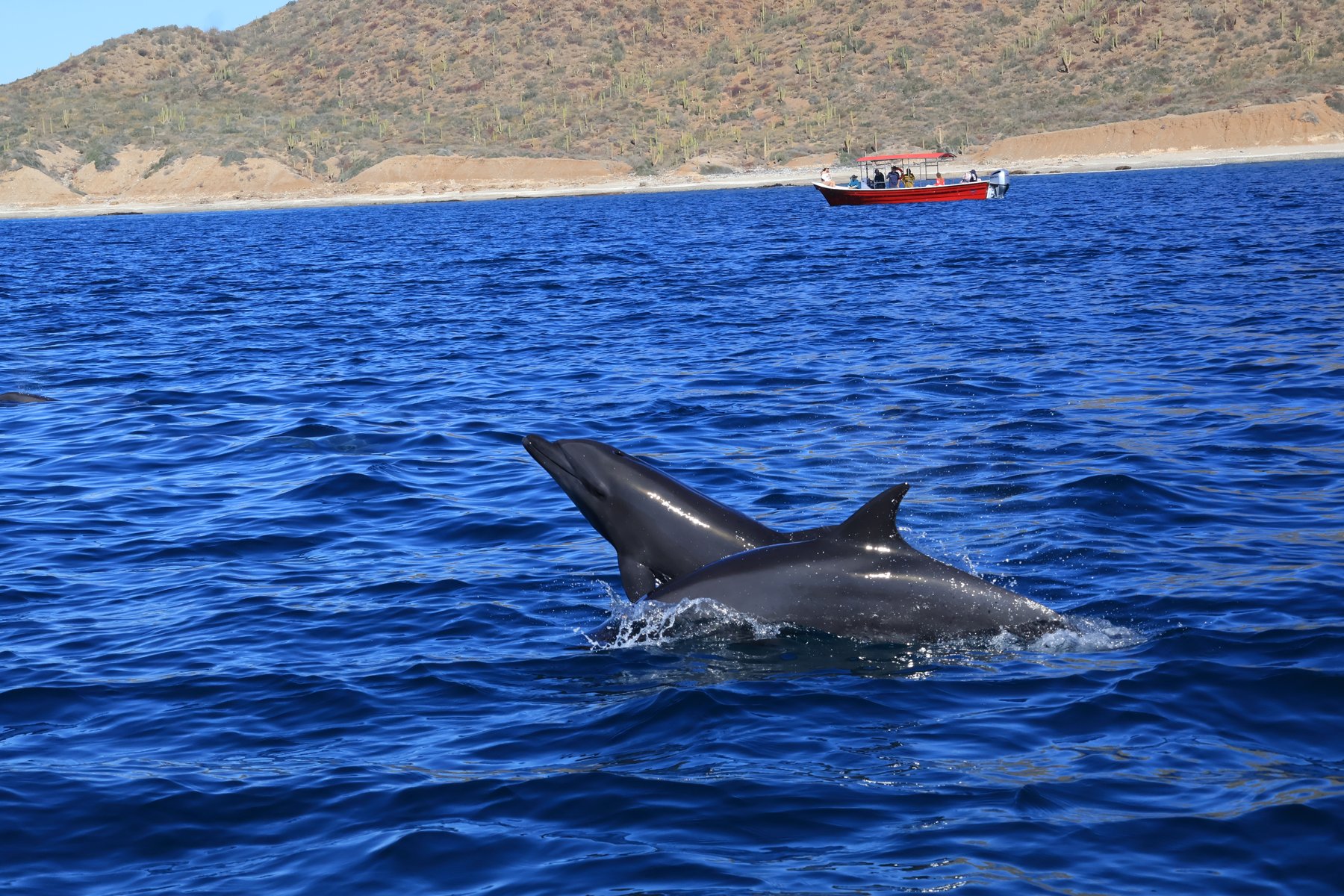
From a boat, observing is not the same as explaining. A photo can record an encounter; to maintain that the distribution changed, comparable records, dates and location are needed, in addition to the oceanographic context.
A historical lesson: the Pacific 2013–2015
Cavole and collaborators described Oceanography a warm anomaly of the North-East Pacific, known as the Blob, which spread to Baja California. Its synthesis documented biological changes, including geographical movements of species and impacts on different groups of fauna. [3]
This work studies 2013–2015, not the current episode. Nor does it make “the Blob” and El Niño synonyms. It helps us understand what types of responses have been observed in the face of marine warming, without assuming that history will repeat itself. [3]
What can we say about an expedition in Baja?
The equatorial mechanism and Pacific background are context, not a wildlife forecast for a Baja California South bay. With the sources of this article we cannot quantify a specific local effect of 2026 or promise more dolphins, fewer whales or an exact date of sighting.
The most useful reading is to maintain curiosity: ask about local conditions, record meetings and follow the team's information. Learning about El Niño makes observation more interesting without turning the sea into a list of guaranteed appearances.
Scientific and official references
- NOAA, Ocean Exploration. (s. f.). What's upwelling?. Referral: November 6, 2026.
- NASA, Earth Observatory. (2026). El Niño Alters Marine Life in the Pacific. Referral: November 6, 2026.
- Cavole, L. M., et al. (2016). Biological Impacts of the 2013–2015 Warm-Water Anomaly in the Northeast Pacific: Winners, Losers, and the Future. Oceanography, 29(2), 273–285. Referral: November 6, 2026.
- NOAA, National Ocean Service. (s. f.). What are El Niño and The Girl?. Referral: November 6, 2026.
The numbered quotations link to the document that supports each statement. Forecasts are presented with their date and period; this article is not automatically updated.