Marine life
Cabo Pulmo: the real story of a reef that recovered
An overfished reef became, in just over a decade, one of the best-documented marine recovery stories in the world.
A national park with its own history
Cabo Pulmo, at the southeastern tip of Baja California Sur, was declared a National Park in 1995 to protect one of the hard coral reefs of the eastern Pacific. It has been part of a Ramsar wetland of international importance since 2008 and sits within the area recognized by UNESCO as the “Islands and Protected Areas of the Gulf of California” World Heritage site.
From overfishing to recovery
Before protection, decades of intensive fishing had considerably reduced marine life in the area. The local community pushed for the reserve’s creation and, just as importantly, for its enforcement: a no-take zone where fishing and collecting are not allowed.
What the science found
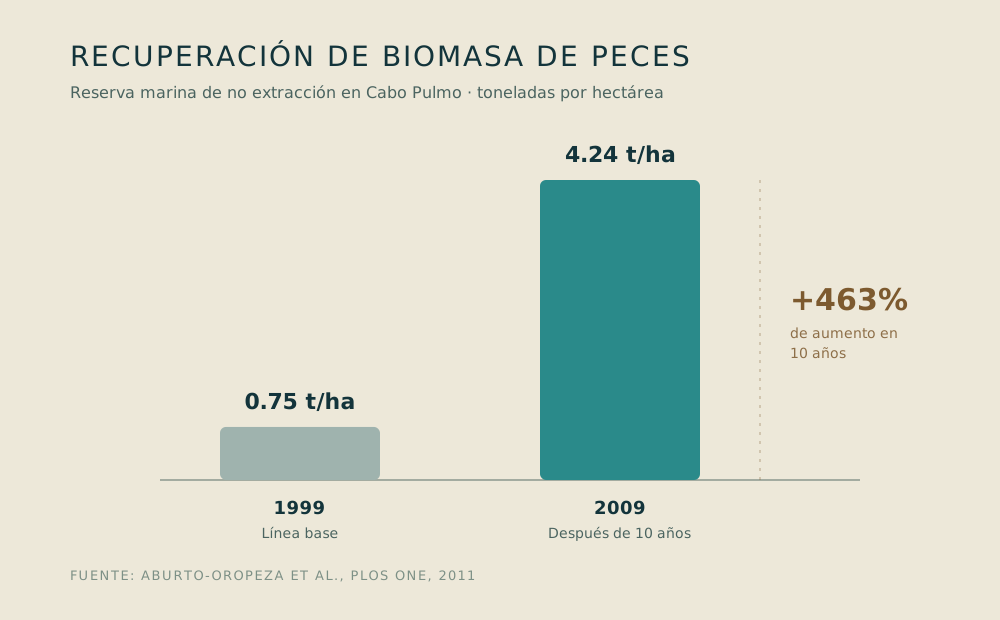
A study published in 2011 in PLOS ONE by Aburto-Oropeza and colleagues documented that, between 1999 and 2009, total fish biomass inside the reserve increased by 463%, while no significant change occurred in other protected or open-access areas over the same period. Top predators and other carnivores grew even more, up to 11-fold in some groups.
The study itself describes these results as one of the largest biomass recoveries ever recorded in a marine reserve, attributed to a combination of community leadership, social cohesion and effective enforcement of the rules.
What you can find diving there today
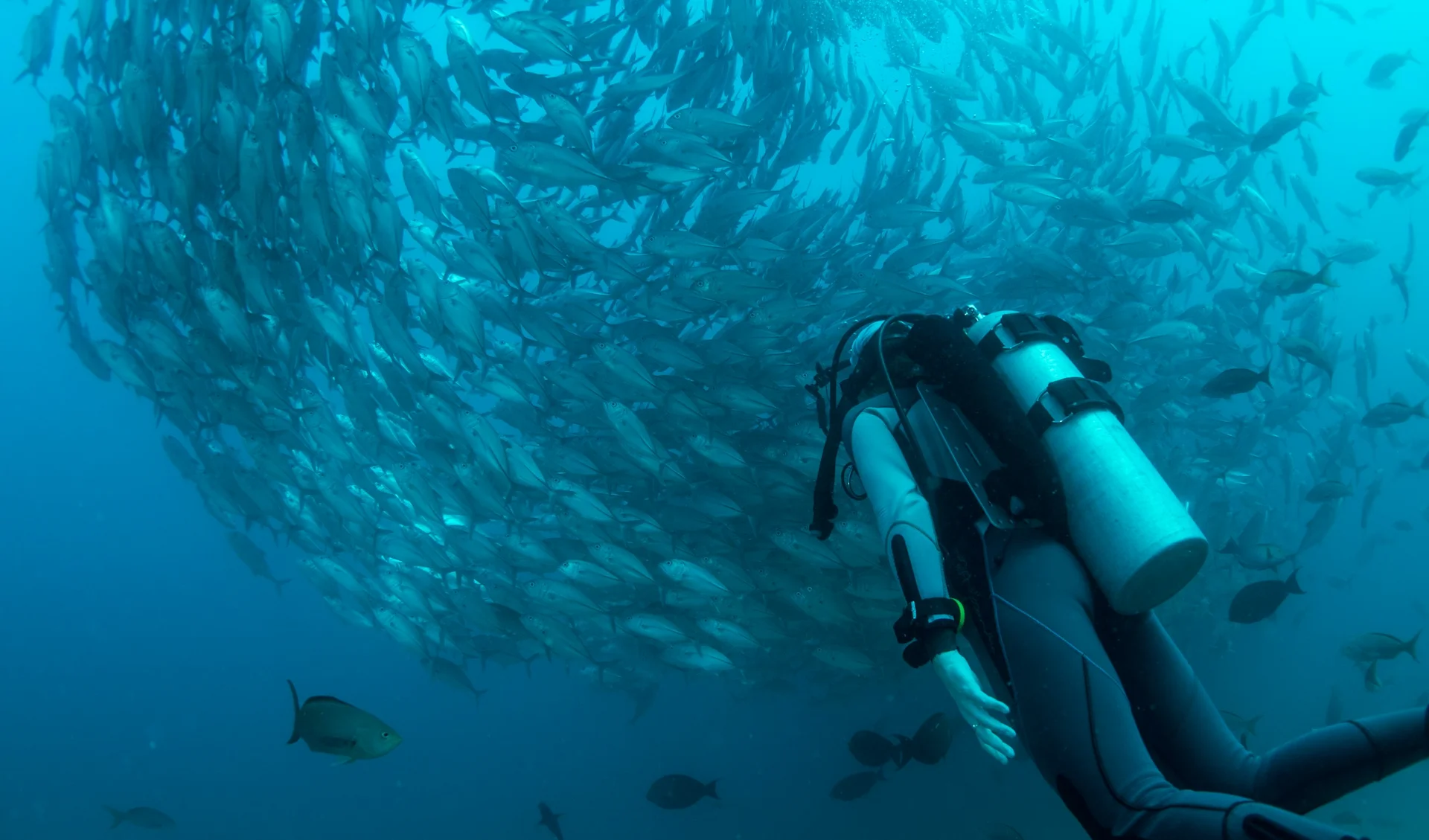
Large schools of fish, groupers and other bigger species are a regular part of the reef’s landscape, though what you see varies by site, season and sea conditions. Con Gorra’s diving expedition based in La Ventana includes dives at Cabo Pulmo; before booking, the team confirms your certification level and experience with you.
What this means for visitors
Being a no-take zone means clear rules: nothing is fished, touched or collected from the reef. Visiting with that care is not just a rule — it is part of what has allowed the recovery to continue.
References to keep exploring
- PLOS ONE · Aburto-Oropeza et al. (2011) · Large Recovery of Fish Biomass in a No-Take Marine Reserve
- Ramsar Sites Information Service · Cabo Pulmo
- UNESCO · Islands and Protected Areas of the Gulf of California
Sources accessed on November 8, 2026. Editorial text by Con Gorra Expeditions.