Marine life
Gray whale or humpback? How to tell them apart
Not all the whales we see in Baja are the same. The shape of the back, the fins and the pattern of the body help to begin to recognize them.
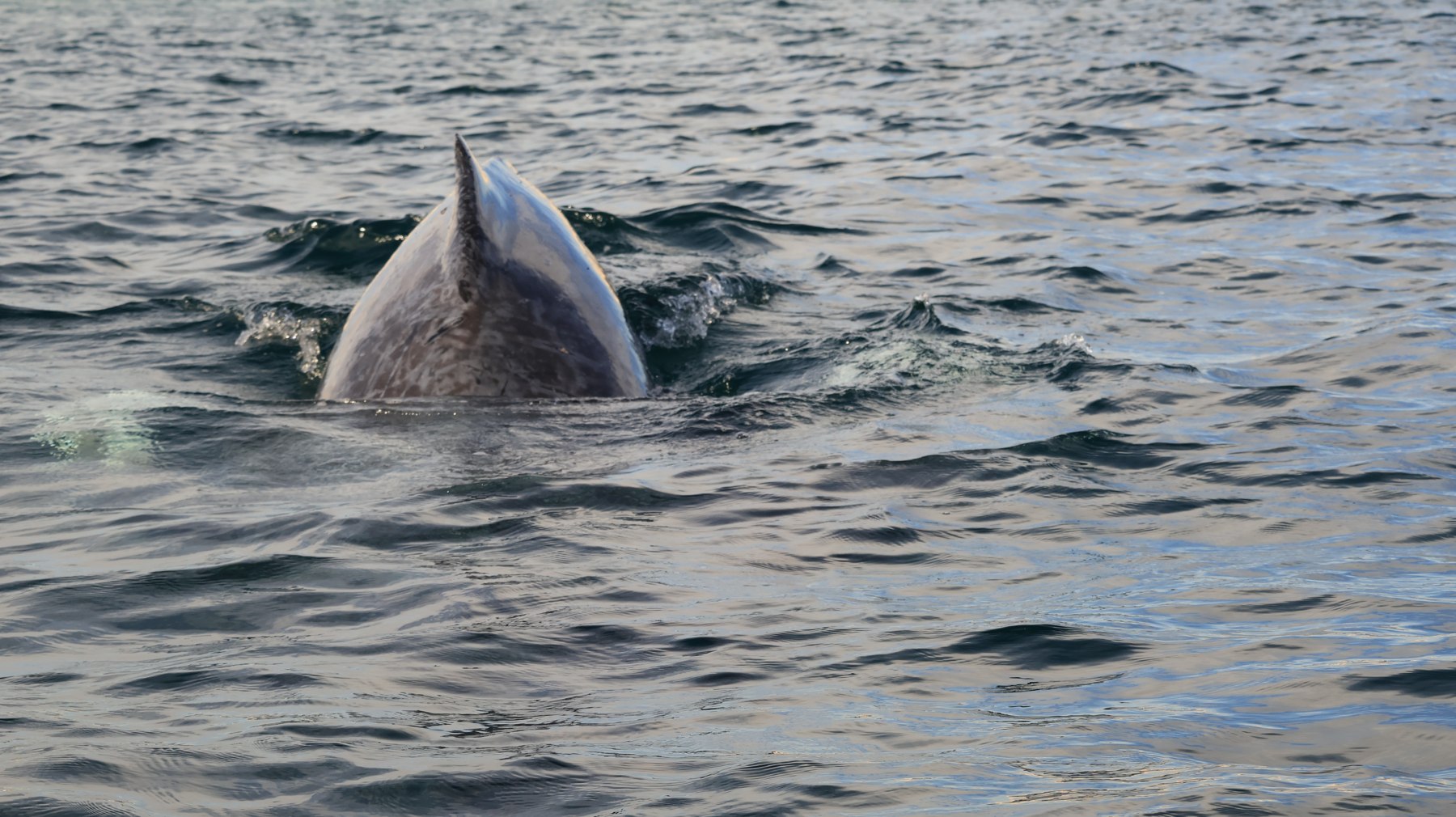
Look at the whole, not just the jump.
A meeting can last just a few seconds: a loin appears, a breath or a tail and soon disappears again. Instead of deciding the species for a single gesture, look at several features and accept when there is not enough information to identify it.
Gray whales and humpback whales are different species, though both are part of the peninsula’s travel stories. Their scientific names are Eschrichtius robustus y Megaptera novaeangliaerespectively.
Grey whale: back with small bumps
The gray whale has a mottled gray body and does not have a dorsal fin. Instead, a low hump is observed followed by a series of small bumps to the tail. Clear patches and attached organisms, such as balanos, can be seen in the body.
The north-eastern Pacific population migrates to the winter and breeding areas of Baja California. Its feed includes bottom invertebrates. These data help to understand your natural history, but the identification of an individual during an exit must be based on what is actually observed.
To enlarge: [1] NOAA Fisheries · Gray whale.
Humpback whale: very long pectoral fins
The long pectoral fins are one of the most characteristic signs of humpback. Its body is usually mostly dark, with varying amounts of white in fins, belly and the bottom of the tail. It has a dorsal fin on the back of the loin.
Patterns and the shape of the tail help researchers recognize individuals through photographs. Humpbacks can jump or hit the surface with their fins, but you shouldn't expect each encounter to include those behaviors.
To enlarge: [2] NOAA Fisheries · Humpback whale.
A quick comparison
| Trago | Grey | Humpback whale |
|---|---|---|
| Loin | No dorsal fin; hump and small bumps. | With dorsal fin. |
| Body | Spotted gray. | Usually dark, with variable white. |
| Pectoral fins | Shorter and wider. | Very long and recognizable. |
To enlarge: [1] NOAA Fisheries · Gray whale, [2] NOAA Fisheries · Humpback whale.
The route matters; observation commands
In Con Gorra, the experience of Grey Whale has its sighting in López Mateos. It is not the same as promising a humpback, or calling any image of the gallery “ballena” without distinguishing species.
During observation, it gives priority to animal space and equipment indications. If you couldn’t see the fin or loin clearly, saying “I’m not sure” is also a good observation. Learning to recognize wildlife starts with looking carefully, not always getting the first one right.
References for further exploration
Sources accessed on November 6, 2026. Publication text by Con Capra Expeditions.